
Tebhaga Movement and Ila Mitra the great Rebellious
Tebhaga
Movement
Tebhaga Movement was the sharecroppers'
movement demanding two thirds of the produce from land for themselves and one
third for the landlords. Tebhaga literally means 'three shares' of harvests.In
the past under Mughal period the peasants gave 1/5,1/4 or 1/3 of their
producing harvest as rent roll.In
British period after passing the sunset law the ownership of property or land
went to zamindars and the Government fixed a rent in every year a certain
time.The most zamindars took most of the harvest from the peasants. They
created raiyot and divided the land among the peasants. On that time the
peasants suffered much.About all of crops went to zamindars as
rent.Traditionally, sharecroppers used to hold their tenancy on fifty-fifty
basis of the share of the produce. In land control parlance such crop sharing
system was known as barga, adhi, bhagi, etc., all meaning half share. The
sharecroppers were commonly called bargadars, adhiars etc. The traditional
system of dividing the produce between the sharecroppers and owners came under
challenge in 1946-47, when the sharecroppers called the traditional system
unjust and claimed two-thirds share of the whole produce on the ground of their
investment and labour input. During the winter or aman harvest of 1946,
sharecroppers of some north and northeastern districts of Bengal and their
supporters had gone to fields and cut down crops and thrashed them on their own
khalan (harvest processing field).
They justified that the whole crops will be divided into
three share, one share would go to owner of land,one would to peasant and the
other one would go to who gave his labour and paid the cultivating
cost.Generally the bargadar would give labour and paid the cost.So he would get
two share of property.But the proprietors didn’t accept it and they tortured
the peasants. So the unprivileged peasants started movement and this was known
as tebhaga movement.
Tebhaga movement was organised mainly by the
communist cadres of the bengal provincial krishak sabha. Under their leadership
the barga (sharecropping) peasants were mobilised against the landlord class.
Tebhaga movement spread out to nineteen districts of Bengal. However, the
movement was most intensely felt in the districts of Dinajpur, Rangpur,
Jalpaiguri, Khulna, Mymensingh, Jessore and the 24-Parganas. As expected, the
landholders had refused to accept the terms dictated by their tenants. They
called in police and caused many of the tebhaga activists arrested and jailed.
But the zamindari repression could not subdue the resistance movement. The
resisting tenants rather added a new slogan to their agenda: the total
abolition of zamindari system. The slogan for reduction of rent rate was also
raised by the peasants supporting the tebhaga struggle.

In some places the tebhaga movement made such
an advance that the peasants declared their zone as tebhaga elaka and tebhaga
committees were set up for the governance of the area locally. Under the
tebhaga pressure many of the landholders withdrew their litigation filed
against the tebhaga activists and came to terms with them. The tebhaga movement
was most successful in the districts of Jessore, Dinajpur and Jalpaiguri. The
tebhaga rights were extensively established in Midnapur and 24-Parganas. All
these developments led the government to initiate a bill in the Legislative
Assembly in early 1947. The bill intended to reform the barga system in the
country in the light of the latest agrarian unrest. But other political
developments handicapped the government to get the Barga Bill enacted into a
law. The Partition of Bengal and the promises of the new government led to the
suspension of the movement.
The tebhaga struggle was successful in so far as it has been
estimated that about 40% of the sharecropping peasants got tebhaga right
granted willingly by the landholders. The struggle also led to the abolition or
reduction of unjust and illegal exaction in the name of abwabs. But the
movement had limited success in East Bengal districts. There was another spate
of tebhaga movement in these districts in 1948-50. The government attributed
the movement to the Indian agents, an allegation which the general people
tended to believe and thus refrained themselves from participating in the
movement. But the movement had definitely influenced the passage of the east
bengal state acquisition and tenancy act of 1950.
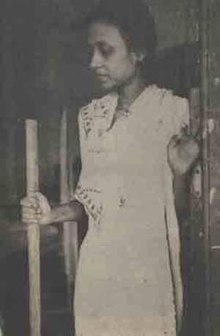
Ila Mitra
.jpg)
In the history of Bengal ,Ila Mitra is a
remarkable name at the sight of surviving leader.She was the legendary peasant leader of undivided
Bengal, a veteran front runner of the communist movement in the sub-continent
and a dedicated friend to the cause of our Liberation War in 1971.Ila Mitra, her maiden,
was a daughter of a simple middle class government service holder. Their
original home was at the village named Bagutia in the then Jheniadah
Subdivision of Jessore district. Her father, Nagendra Nath Sen was an
accountant of AGB office, Calcutta when Ila was born on 18th October
in 1925. She completed her education at Calcutta- studying at Bethun School
& College under Calcutta University. She passed BA with honours in Bengali
literature in 1944. She finally obtained her MA degree in Bangla literature and
Culture from Calcutta University as a private candidate in 1958 after long 13
years of passing BA. Why? That is part of her story.
It might appear strange to many of us such a political personal was a
champion athlete in her school and college days. In the decade of thirties she
was a star woman in the world of sports in Bengal. She was junior champion
athlete in Bengal Presidency from 1935 1938. She was a good basketball player
too. She was selected to represent India in athletics in Olympic games
scheduled to be held in 1940 in Japan, which however could not be held because
of World War II. In 1944, she got married with Ramendra Nath Mitra, son of a
Zemindar family of Ramchandrapur, then under Maldah district of British Bengal
adjacent to present district of Nawabganj in Bangladesh. Ramendra however not
only a son of a Zemindar family, but himself an organizer of the communist
movement in Maldah. He was a district president of Peasant Association. The couple had a son
in 1948, while Ila Mitra was organising a peasant movement in the locality of
Nachol under the directives of CPI.
Ila Mitra and the Tebhaga
Movement
Ila became active in the communist movement in the early 1940s, becoming a
member of the Communist Party of India (CPI) at the age of 18. After her
marriage, when she moved to Ramchandrapur, Ramendra Mitra encouraged her to
take part in the communist movement as she had as a student in Calcutta. When a
riot broke out in Calcutta, Bihar and some parts of East Bengal, she went to
Noakhali under CPI's directives, extensively touring affected areas together
with Mahatma Gandhi and other Hindu-Muslim leaders, and took part in
rehabilitation work among the distressed people. This was the first time that
she transcended the confines of a conservative Hindu family, and came directly
in contact with the masses.
After the partition of Bengal in 1947, party leaders,
including Ila Mitra, were asked to go underground because of repression of the
communist party in Pakistan. This was in 1948 – Ila was then pregnant. She
crossed over to Calcutta to give birth to her son, Mohan, whom she left under
the care of her mother-in-law at Ramchandrapur.
She then returned to Nachol (which, even now, is an
inaccessible area) undercover to give leadership to the peasant movement with
her husband.The local peasant leaders with the help of the underground
communist and Kishan Samity leaders worked relentlessly to prepare the ground
of the Tebhaga movement in that locality from 1948-1950. It may be remembered
that at the time when the Tebhaga movement was gaining momentum under the fiery
leadership of Ila Mitra, the movement in other districts of East Bengal had
been crushed by the Muslim League government.
In the area of Nachol, the jotdars used to get
two-thirds share, while only one-third went to the cultivator, instead of half
as in other districts of north Bengal. For husking rice from paddy, the
labourers used to get only three Aras out of 20 Aras. The objective of the
movement, in very simple terms, was to ensure that, out of the total yield,
two-thirds share went to the cultivator, and one-third to the jotdar, and out
of 20 Aras of husked rice, the labourer received seven Aras.
 |
| Ila Mitra at Dhaka Medical College Gate after being released from jail in 1954. PHOTO: MARXIST INDIANA |
Ila extensively toured the villages, met with farm workers, common cultivators and small farmers and publicly addressed the peasant meetings in the remote corners of the villages, all the while bluffing the police administration. In this way she earned the title 'Rani Ma'.
Once the ground was ripe, the final phase of the
movement was launched to implement the Tebhaga doctrine. The movement
subsequently took a violent form, led by a defence force from among the
revolutionary peasants, in which the Santal community was the main element of
force. By 1950 almost all landowners in and around Nachol were either persuaded
or forced to accept the 'Sat Ari & Tebhaga doctrine'.
The strategy the peasant leaders adopted was simple
but effective. After the crops of a particular field were harvested, the owner
of the land was invited to be present on a given day, along with the leaders of
the movement, common villagers and the cultivator. The crop was divided in
three parts -- the cultivator kept two-thirds, and the rest was sent to the
owner. The landowners were forced to accept the distribution.
The process of implementation was smooth for the most
part, except in a few cases when force had to be employed. However, to the
administration and landowners, the movement constituted an illegal 'looting of
yields' by force. The government could not sit idle particularly when the
landowners, jotdars, and zamindars collectively and individually appealed to
the administration to end this 'terrorism' of the peasants. The landowners,
with the help of the police, let loose a reign of terror and oppression on
villages to subdue the movement. Many peasant activists and innocent people
were tortured and taken into police custody.
On January 7, about 2000 soldiers arrived in Nachol
and set fire to 12 villages, ransacked countless houses and killed many
villagers as they moved in towards Chandipur village. The army was supported by
armed police and ansars. They moved from door to door in search of the wanted
leaders.
An unequal fighting began -- on the one side thousands
of Santal, Hindu and Muslim peasants comprising the defence force of Tebhaga
and on other side, the army, police and ansars armed with modern fire arms. The
defense force could not resist any more-- they had to give in. Hundreds of
Santals members were killed. Villagers were forced to leave the country to
escape inhuman repression at the hands of law enforcing agencies.
The peasant comrades insisted that they take their
Rani Ma to the other side of the border. But Ila refused to move, until all her
comrades in arms were also safe. Consequently, she and hundreds comrades were
arrested. And in the Nachol police station began the inhuman torture. The
police repeatedly asked the tortured peasants to admit that it was Ila Mitra
who led the fight on that day and killed a number of policemen. But no one
confessed –around 50 – 100 peasants died in police torture.
Then came the unimaginable torture on Ila Mitra
herself. Her fault was-- she was a woman, a Hindu, a communist and, above all,
she led the Tebhaga rebellion with arms. The process and methods of repression
and torture were beastly and totally devoid of any humanity. It was a glaring
example of how a civilised government uses its state machinery to brutally
torture its own citizens in the name of extracting a confession.
Nachol Case Initiate Opened at Rajshahi Court
In November 1950
the case of killing ASI of Nachol was formally opened at the court of first
class magistrate Mr. Ahmad Mian. There were 31 accused of which most prominent
of course was comrade Ila Mitra. Others were: Animesh Lahiri, Azahar Shaikh,
Brindaban Saha, Sukra Kamar, Renga Bali, Sukh Bilas Singha, Chatur Majhi, Yadu
Majhi, Chhanu Majhi, Bhadu Mandal alias Bhadu Barman, Dulu Majhi, Upen Koch,
Mangla Mandal, Indria Morsu, Suren Barman, Toton Majhi, Lalo Ray, Skifem Majhi,
Gopal Singha, Mohanta Mallik, Syfal Majhi, Deben Ray, Smay Yaren, Kishan Tadu,
Chinu Ray, Khoka Ray, Nagen Sardar, Durga Bakshi. Later on out 31 last eight
were dropped making the list of 23 accused. Comrade Mitra remembered the event
in this manner :
“After medical
treatment for more than a year as I recovered slightly- I was attacked with
Malaria and Kalajar. At that time if I were not properly taken care of by
Manoroma Masima and Lily I would have not survived. When I resumed the strength
the trial began. As I still could not walk properly I had to go to the court in
horse driven cart with police protection. The very day I returned from the
court I forcibly entered the female ward the general female prisoners and
security prisoners lived. Since then I did not return to the solitary cell.
Other security prisoners also helped me in this respect, otherwise I could not
had stayed there. I found many security prisoners in the ward among whom I
still remember Manoroma Basu, Pultul Dasgupta, Sujata Dasgupta – all of
Barisal, Bhanu Devi of Khulna, Lili Chakraborty of Pabna, Amita Datta, Susama
Devi, Aparna Roy Choudhury of Sylhet, Bhdra Mani Hajang and Arsa Manigupta of
Mymensingh and Rekha of Naogaon – in total 14. They all tried to help me
surviving and keeping my strength to face the trial. Although the case was
initiated on November 1950- it’s hearing started on January 1951. A noted
lawyer of Rajshahi bar Mr. Biren Sarkar and others defended her case.
Manoroma Masima insisted that she must give a vivid statement what happened at
Nachol police station. Bhanu Devi cautioned her if she did not disclose the
full truth of torture on her body including sexual violence she would recommend
to the party leadership for discontinuing Ila’s membership. All her co
prisoners including the common prisoners encouraged her to tell the truth.
Inspired by their advice she decided the give a statement of full truth even at
the cost of her personal and family honour. She admitted although she was a
communist but still then as a Hindu girl she was in a dilemma and was confused.
She faced immense difficulty to overcome the social barrier. Finally he spoke
out the whole truth of the event.
We reproduce below
the statement she gave before the court of Rajshahi, perhaps on the very first
day when the court proceeding started at Rajshahi in January 1951.
Statement of Ila Mitra before Court
How Humanity Attacked UnderLiakat – Nurul Amin Regime ?
Below is
the statement of Sm. ILA MITRA made before the court at Rajshahi to inhuman
treatment meted out to a lady, only because she holds a political opinion other
than that of Liakat-Nurul Amin Feudal class: -
Sm. Ila Mitra in bar statement pleading ‘not guilty’ to the
charges said ;
I
know nothing about the case. On 7-1-50 last I was arrested in Rohanpur and
taken to Nachole the next day. The police guards assaulted me on the way and
thereafter I was taken inside a cell. The S.I. threatened to make me naked if I
did not confess everything about the murder. As I had nothing to say, all my
garment were taken away and I was imprisoned inside the cell in stark naked
condition
No
food was given to me, not even a drop of water. The same day in the evening the
sepoys began to beat me on the head with butt ends of their guns, in the
presence of S.I. I was profusely bleeding through nose. Afterwards my garments
were returned to me, and about 12 midnight I was taken out of the cell and lead
possibly to the quarters of the S.I., but I was not certain.
In
that room where I was taken they tried brutal methods to bring out confession.
My legs were pressed between bamboo sticks, and the people around me were
saying, I was being administered a ‘Pakistani injection’. When this torture going
on they tied my mouth with a napkin. They also pulled off my hairs, but as they
could not force me to say anything. I was taken back to the cell carried by the
sepoys, as after the torture it was not possible for me to walk.
Inside
the cell again the S.I. ordered the sepoys to bring four hot eggs, and said,
now she will talk. Thereafter four or five sepoys forced me to lie down on my
back, and one pushed a hot egg through my private parts. I was feeling like
being burnt with fire, and became unconscious.
When
I came back to my senses in the morning of 9 – 1- 50, the S.I. and some sepoys
came into my cell and began to kick me on the belly with boots on. Thereafter a
nail was pierced through my right heel. I was then lying half conscious, and
heard the S.I. muttering : ‘We are coming again at night, and if you do not
confess, one by one the sepoys will ravish you. At dead of night, the S.I. and
his sepoys came back and the threat was repeated. But as I still refused to say
anything, three or four men got hold of me, and a sepoy sexually began to rape
me. Shortly afterwards I became unconscious.
Next
day on 10-1-50 when I became conscious again, I found that I was profusely
bleeding and my cloth was drenched in blood. I was in that state taken to
Nawabganj from Nachole. The sepoys in Nawabganj jail gate received me with
smart blows.
I was then in a prostate
condition and the Court Inspector and some sepoys carried me to a cell. I had
high fever then and I was still bleeding. A doctor, possibly from the Govt.
Hospital at Nawabganj had noted the temperature of my body to be 105 o.
When he heard from me of profuse bleeding I had he assured me, I would be
treated with the help of a woman nurse. I was given some medicine and two pieces
of rugs.
On 11-1-50 the woman nurse of
the Govt. Hospital examined me. I do not know what report she gave about my
condition. After she came, the blood stained piece of cloth I was wearing was
changed for a clean one. During all this time I was in a cell of the Nawabganj
PS under the treatment of doctor. I had high fever and profuse bleeding. and
was unconscious from time to time.
On 11-1-50 a stretcher was
brought before my cell in the evening and I was told that I would have to go
elsewhere for examination, on my protest that I was too ill to move about, I
was struck with a stick and forced to get on the stretcher after which I was
carried on it to another house. I told nothing there, but the sepoys forced me
a sign a blank paper. I was at time in a semi-conscious state with high fever.
I was next day transferred to the Nawabganj Govt. Hospital, and on 21-1-50 when
the state of my health was still very precarious, I was brought from Nawabganj
to Rajshahi Central jail, and was admitted to the jail hospital.
I had not under any
circumstances said anything to the police, and I have nothing to say than I
have stated above.
NB:
The statement was issued in Bengali. As it was not published in any dailies, it
was translated into English and was circulated throughout East Bengal as an
Istahar (Pamphlet) during early 1950.
The worst parts of torture were of sexual violence. It had two kinds:
(i)
forcibly pushing a hot egg inside her vaginal channel and
(ii)
violent raping by a sepoy. Both these offensive action were imparted at the
instruction and presence of S.I. of Nachol. Let us hear the experience and
feeling of such terrible torture from her own words in Bengali.
What happened to the case against Ila Mitra and her
co-accused?
Ila Mitra was the chief accused. She was charged with directly murdering
sepoys and an ASI. The charge sheet reported that she was the main leader of
agitating the peasants against the landowners, jotdars and zemindars,
organizing the so-called Tebhaga Movement, looting forcibly yields etc. She
also led the unlawful assembly of peasants in Chandipur village on 5th January,
'50. The accused were charged with the offence committed under sections 148,
302/149 of Pakistan Penal code.
The trial continued for three months in the magistrate court of Rajshahi. The
then district session judge S. Ahmed gave the verdict of the case on 11th
January, 1951 pronouncing life imprisonment to all the accused including their
leader Ila Mitra under the section 302/149 of Pakistan penal code. The learned
judge observed in his verdict :
Although all the accused took part in the unlawful assembly and some of them were party to killing, yet as it could not be definitely ascertained who were they, and as it could not be ascertained at whose strike or strikes the victims succumbed to death, the court therefore refrained from pronouncing capital punishment.
What happened to Ila Mitra's Co-fighters & other
comrades?
After the arrest of the Queen
Mother of the rebellion, the police force became all the more ferocious. The
Saontals and poor peasant villages became their target of atrocities. Hundreds
of Saontals after arrest were brought to Nachol police station. They were put
in a single cell without food and drinking water. Some were left outside on
open field with their hand & legs tied up. More over constant beating &
other brutal torture including beating with rifle butts and kicking with boots
by the sepoys. At least 24 Saontals were succumbed to death due to physical
torture and starvation. Even after they were brought to Nawabganj police
station headed by an OC of relatively kind hearted man, the brutal torture on
the Nachol peasants continued and many died at the police station. After a few
days the entire arrested group of the arrested Saontals of Nachol were
transferred to Rajshahi Central jail wherein they were confined in a small
room. They were constantly physically tortured, kept half feed and even some were
killed. Most of them went to india and don’t come back.
Dhaka central Jail
As her condition at Rajshahi jail deteriorated she was brought to Dhaka
Central Jail and subsequently moved to Dhaka Medical College almost in a dying
condition with broken health and totally disabled to move. She was placed under
a small medical board headed by Dr. SK Alam for thorough investigation and
treatment. This was in 1953.This was the time when East Bengal was bubbling
with movement for democracy, students have made supreme sacrifice for language
in 1952 and people were fighting against repression of Nurul Amin Government of
ML. In the minds of the people language martyrs, Shahids of Khapra ward of
Rajshahi jail, and Ila Mitra and he co-sufferers were the heroes in the eye of
the common mass. Demands were raised for release of the security prisoners and
Ila Mitra. Treatment at DMC did not improve her condition significantly,
although she regained her walking ability very slowly.
Her condition became a great concern of conscious people. On 5th April, 1954
five members of the East Bengal Legislative Assembly issued a statement
expressing their concern in which they stated : On 3rd and 4th April we saw
Mrs. Ila Mitra in Dacca Medical College. Being constantly at the jails and police
custody she had been suffering from incurable decease that had brought her to
dying state. At present she was totally disabled to walk and completely bed
ridden. She could not take any thing. Adopting an alternative way of feeding is
prolonging her life. Her 5-year-old son is now with a relative of hers. If she
were not released without any condition, it would be difficult to save her
life. " Moulana Bhasani and some other leaders also issued similar
statements. When Ila Mitra was brought to DMC hospital every day hundreds of
students, elites, and political leaders of all shades used visit her. Looking
at her pathetic condition it was difficult for any one to resist tears coming
out To what extent a state machinery could be cruel - case of comrade Ila Mitra
is a glaring example of it.
Picture : Comrade Ila Mitra at
DMC hospital, 1954
Ila Mitra, daughter of Calcutta, 'Rani Ma of Banglar
Krishak' returned to Calcutta
Some time in mid June, 1954 Ila Mitra was released in a parole and was allowed
to go to Calcutta for medical treatment. Dr. Alam of DMC with whom Ila Mitra
developed a very fine relation himself accompanied her to Calcutta and he was
with her till she got admitted at Calcutta Medical College Hospital. Ila Mitra
did remember this noble hearted doctor throughout her life in different ways.
She was taken to Calcutta by plane- she recalled the day this way: ' The day I
departed from East Bengal by plane is still in my memory. The gentle me who sat
beside me was not only a Pakistani citizen but also a highly educated well
placed officer. Drawing my attention to the scenic beauty of watery, flat
riverine East Bengal, he repeated asked me if I, being a foreigner, would
forget my love to the soil of this country. He requested me with utmost
sincerity to return, saying that Pakistan needs daughter like me. I don't
remember what was my reply. ' The Government of Pakistan did not like the very
sympathetic attitude of Dr. Alam shown to Ila Mitra for which he had to suffer
in his professional life.
Ila Mitra Visits Bangladesh
She had never forgotten Bangladesh. Immediately after independence in 1972 and
then again in 1974 to attend a conference of Bangladesh Teachers' Association.
On the last occasion, during a courtesy meeting with the Bangabandhu he told
her that Bangladesh considers Mitra couple as its son and daughter. He further
told her that he would bring them back as citizens of Bangladesh. However,
before his plan could be materialized Bangabandhu himself was assassinated by
anti Bangladesh force within a year. We turned one eighty degree in our nation
aspiration. In ret rogation we started from that moment from liberalism to
fundamentalism, from secularism to islamization, from democracy to autocracy
and military dictatorship.
Life in
Calcutta
She was elected in West Bengal assembly from
CPI.She was member of Assembly for four times.She helped Bangladesh at the time
of Liberation war 1971.She was with the Bangladeshi people who flew to india
from Bangladesh at the war.
Overall she is an important example for any
kinds of movement. She survived most at her life and love of general people.
Writer -
Ashim Kumar Biswas
Second Batch , Law and Land Administration
University of Rajshahi
Comments
Post a Comment